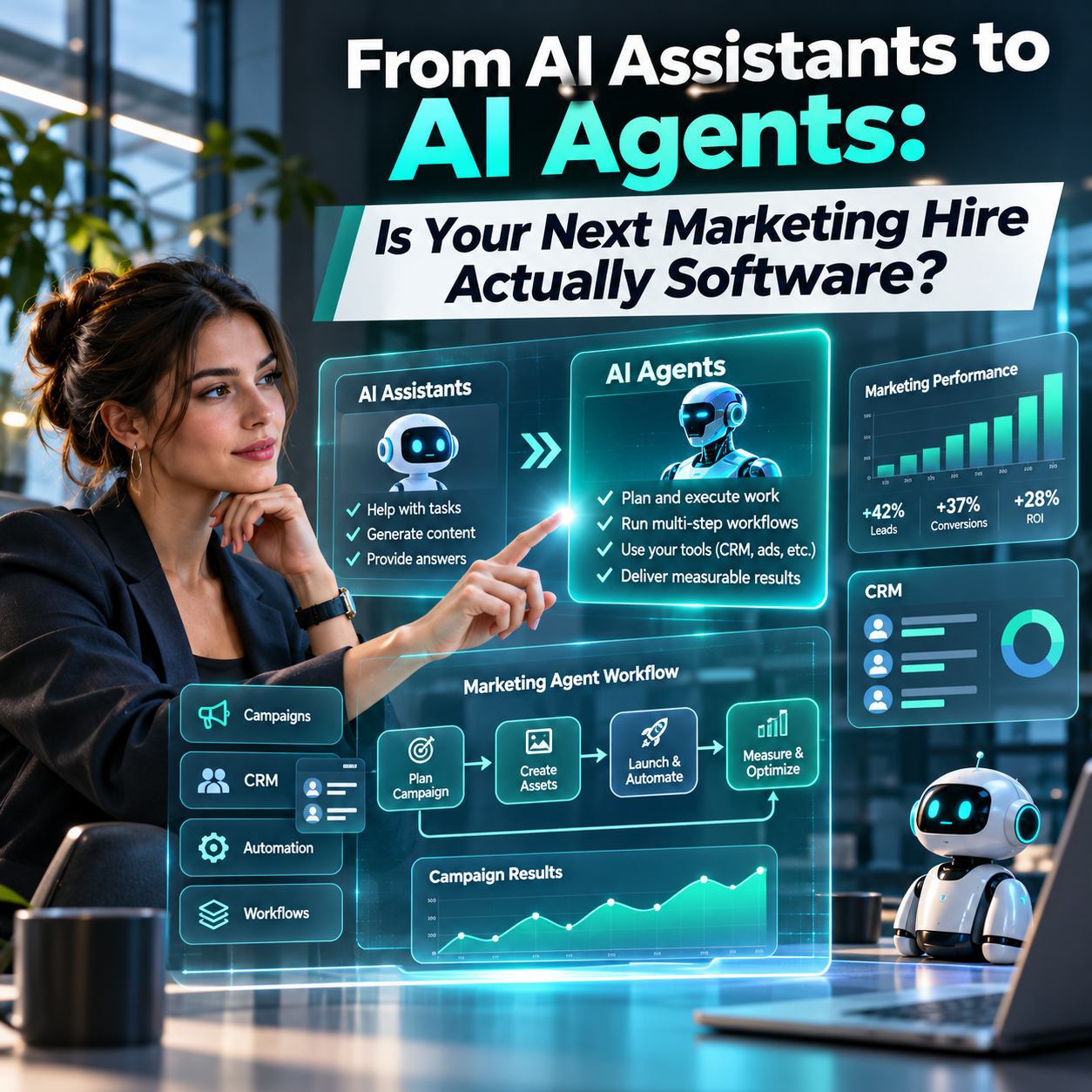
From AI Assistants to AI Agents: Is Your Next Marketing Hire Actually Software?
How autonomous AI agents are transforming digital marketing, reshaping business operations, and helping small businesses scale without expanding their payroll.
How autonomous AI agents are transforming digital marketing, reshaping business operations, and helping small businesses scale without expanding their payroll.
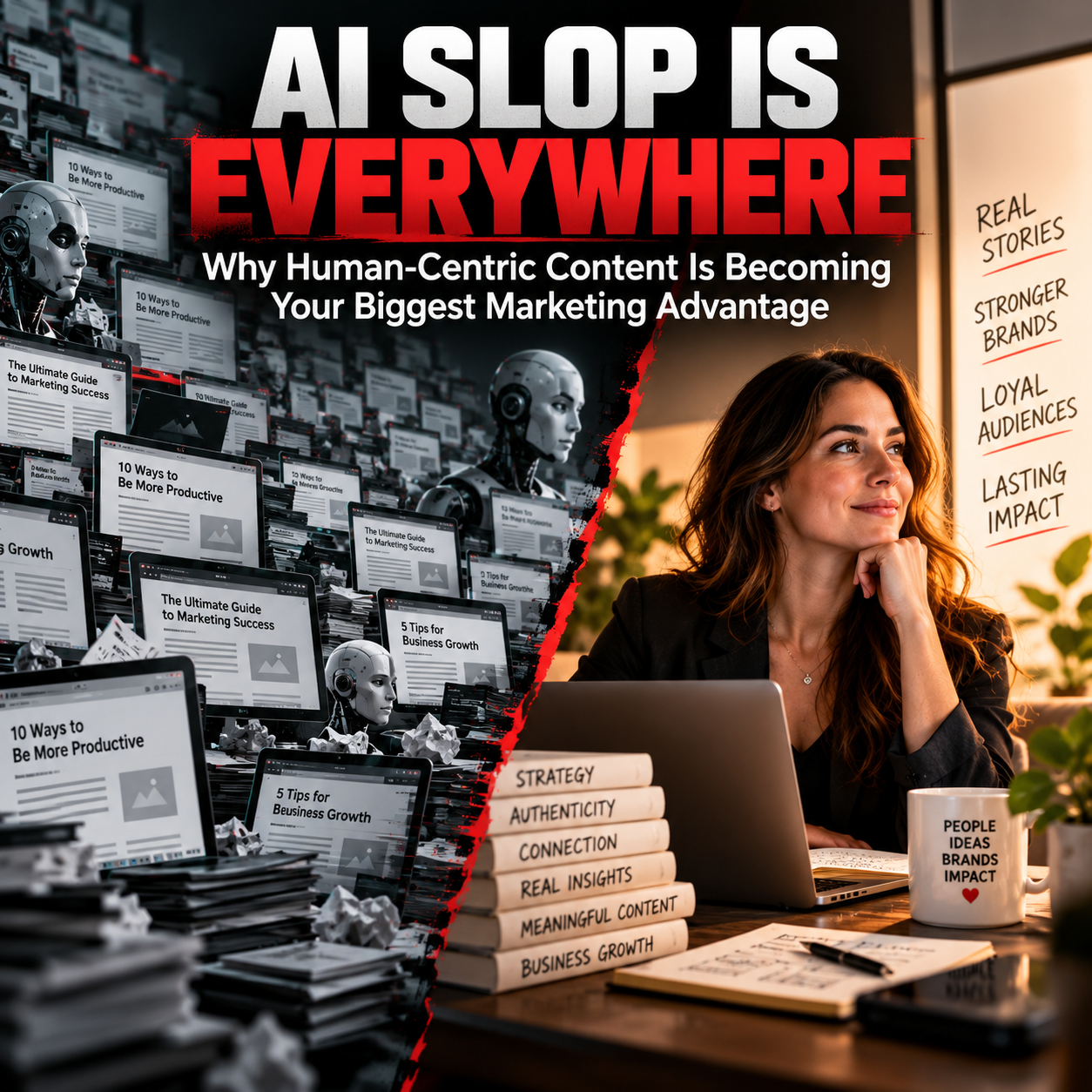
Businesses can brainstorm ideas faster, create first drafts in seconds, repurpose long-form content, analyze customer data, generate outlines, improve workflows, and automate repetitive marketing tasks that once consumed hours.
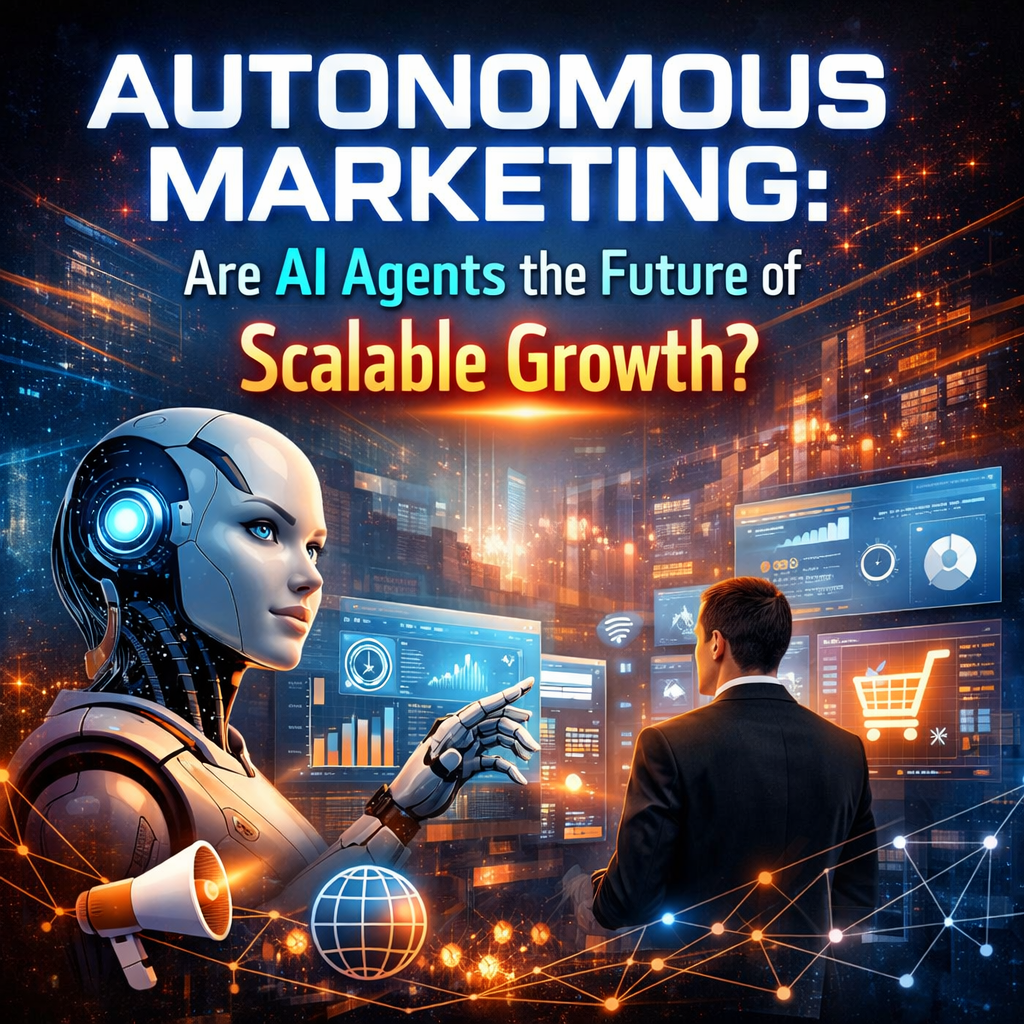
The question is no longer if artificial intelligence will play a role in marketing, but how deeply it will reshape strategy, execution, and scale. Autonomous marketing systems promise to operate with minimal human intervention, learning continuously, optimizing campaigns in real time, and making decisions at machine speed.
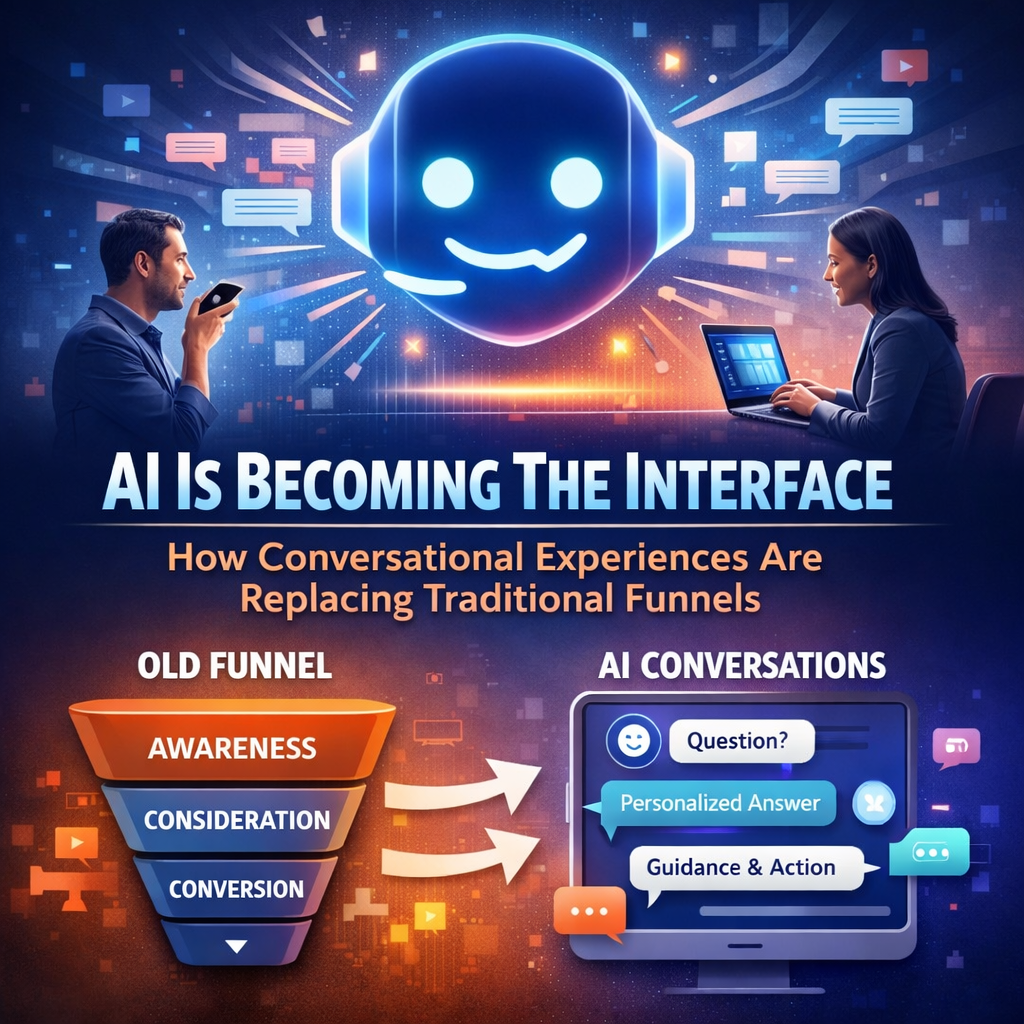
For decades, digital marketing has been built around one dominant structure: the funnel. Awareness at the top. Consideration in the middle. Conversion at the bottom. Websites, landing pages, lead magnets, email sequences, retargeting ads—all designed to push people step by step toward a decision.
Marketing has always been a blend of art and science — intuition paired with data, creativity woven through strategy. But in 2025 and beyond, a new kind of marketer is emerging: the AI-driven marketer. This isn’t a person who simply “uses AI tools.” It’s a marketer who blends human creativity, emotional intelligence, and strategic insight with AI’s speed, scale, precision, and predictive power.

Customer expectations have changed more in the last five years than in the previous fifty. Today’s digital audience no longer simply responds to marketing—they anticipate it. They look for frictionless experiences, real-time interactions, and brands that understand their needs before they even ask.
In the ever-shifting landscape of marketing, we’re moving fast from “automation only” to something more nuanced, more powerful: the human + AI hybrid model. It’s not simply about replacing humans with machines. Rather, it’s about combining the best of both worlds — the scale, speed and pattern-recognition of artificial intelligence (AI) with the empathy, creativity and strategic insight of humans. This marks a new era in marketing: one where data-driven automation meets human-centered experience.
In today’s digital economy, artificial intelligence isn’t just a tool — it’s a co-founder. Businesses that learn how to partner with AI are discovering new levels of strategy, speed, and scalability that were once unimaginable.
In a world racing toward full automation, the winning edge isn’t about replacing people with machines — it’s about combining people and machines in a novel, hybrid way. The most forward-looking organisations are adopting a human + AI hybrid model, and by doing so, they’re making smarter, faster, more empathetic decisions. This article explores what the hybrid model means, why it matters, and how businesses can adopt it successfully.
In the past decade, marketing has gone from broad segmentation to hyper-personalization; from static ad schedules to real-time bidding; from manual campaign adjustments to algorithmic optimization. Yet, even as AI and automation tools proliferate, much of marketing still operates under human oversight, with humans nudging, tweaking, or steering AI systems.