But in 2025, that belief is collapsing in real time.
Companies with airtight strategies are still burning out their teams.
High-growth organizations are stalling due to internal friction.
Perfect roadmaps are failing under pressure.
The truth is uncomfortable but undeniable:
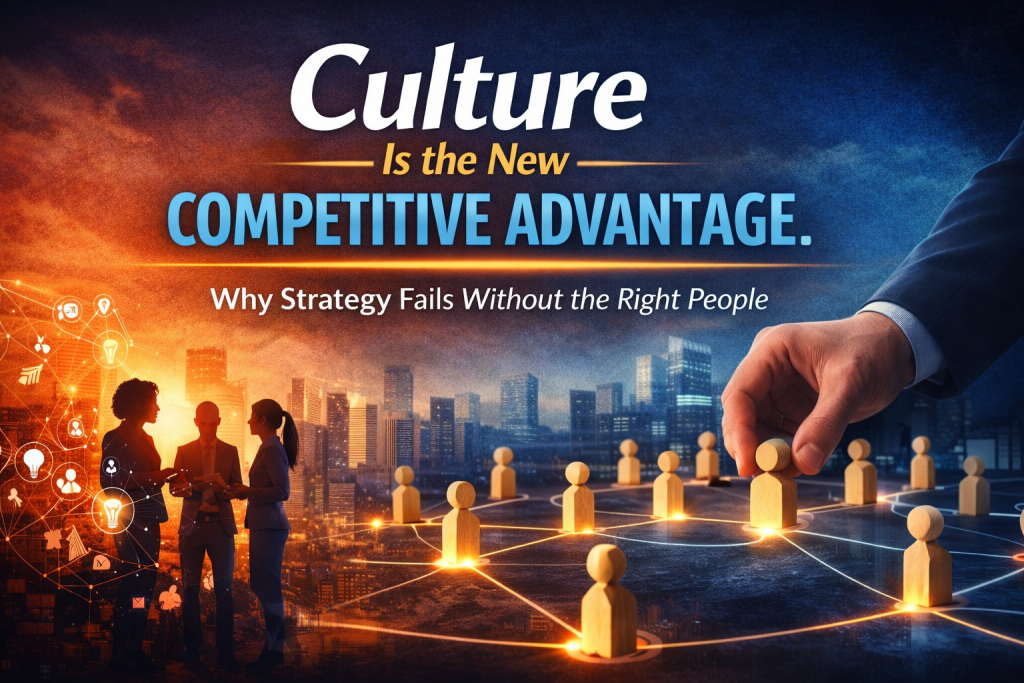
Strategy doesn’t fail because it’s flawed.
Strategy fails because culture can’t support it.
In today’s experience-driven, people-powered economy, culture is no longer a “nice-to-have.”
It’s the operating system beneath every decision, interaction, and outcome.
And without the right people aligned around the right values, even the most sophisticated strategy becomes useless.
The Myth of Strategy as a Silver Bullet
Most organizations still approach growth backward.
They obsess over:
Revenue targets
Marketing tactics
AI tools
Operational efficiency
Competitive positioning
Then they hope culture “figures itself out.”
It never does.
Culture isn’t a poster on the wall or a set of core values buried in a handbook.
Culture is how people behave when pressure hits.
It shows up in:
How teams communicate
How leaders respond to failure
How decisions are made when no one is watching
How customers are treated when things go wrong
If your culture is misaligned, your strategy becomes fragile.
If your culture is strong, your strategy becomes adaptable.
Why Culture Is the Ultimate Competitive Advantage
Competitive advantages used to come from:
Capital
Distribution
Technology
Scale
Today, those advantages are temporary at best.
Technology is democratized.
Tools are accessible.
Markets shift faster than planning cycles.
What can’t be copied easily?
A high-performing, purpose-driven culture.
Culture compounds over time:
In contrast, poor culture creates invisible drag:
Decision paralysis
Burnout
Silos
Turnover
Customer distrust
No strategy can outpace internal dysfunction.
People Are the Strategy (Whether You Admit It or Not)
Every strategy is executed by people.
People:
Interpret the plan
Prioritize tasks
Communicate intent
Solve problems
Make judgment calls
If those people are:
Disengaged
Burned out
Misaligned
Fear-driven
Your strategy gets distorted at every layer.
This is why companies with “great ideas” still fail.
They didn’t fail at strategy.
They failed at people alignment.
Culture Drives Execution, Not the Other Way Around
Execution isn’t a skill.
It’s a byproduct of trust.
High-performing teams don’t execute better because they’re smarter.
They execute better because:
They feel safe to speak up
They understand the “why”
They trust leadership
They believe their work matters
Culture creates clarity.
Clarity creates confidence.
Confidence creates momentum.
Without culture, execution slows.
With culture, execution scales.
The Cost of Ignoring Culture (It’s Higher Than You Think)
Most leaders underestimate the financial impact of poor culture.
Here’s what culture breakdown actually costs:
Employee turnover and rehiring expenses
Lost productivity from disengagement
Delayed projects and missed deadlines
Poor customer experiences
Brand reputation erosion
Leadership burnout
According to multiple workforce studies, disengaged employees cost organizations thousands per employee per year.
But the biggest cost?
Missed opportunity.
When your team is just surviving, they’re not innovating.
Why Strategy Alone Can’t Survive 2025 and Beyond
We’re operating in an environment defined by:
Constant change
AI acceleration
Hybrid work
Creator economies
Transparent brands
Empowered employees
Rigid strategies break in dynamic environments.
Culture provides adaptability.
Organizations with strong cultures don’t panic when the plan changes.
They adjust.
They:
Strategy sets direction.
Culture determines velocity.
Culture Is What Happens When the Playbook Fails
No plan survives first contact with reality.
Markets shift.
Platforms change.
Algorithms update.
Customers evolve.
When the playbook stops working, culture takes over.
Ask yourself:
Do your people freeze or adapt?
Do they blame or collaborate?
Do they wait for permission or take ownership?
Those behaviors aren’t strategic.
They’re cultural.
The Right People Make Strategy Anti-Fragile
The right people don’t just execute instructions.
They improve the strategy as they go.
They:
Challenge assumptions
Surface blind spots
Offer insights from the front lines
Solve problems creatively
Take responsibility without being asked
That only happens in cultures built on:
Psychological safety
Trust
Shared purpose
Accountability
Respect
You don’t scale strategy.
You scale people who understand the mission.
Culture-First Companies Win Differently
Culture-first doesn’t mean “soft.”
It means intentional.
Culture-first companies:
Hire for values, not just resumes
Lead with clarity, not control
Measure success beyond metrics
Reward behaviors, not just outcomes
Treat employees as stakeholders, not resources
The result?
Teams that care.
Customers who feel it.
Brands people trust.
From Culture Fit to Culture Add
One of the biggest mistakes leaders make is hiring for “culture fit.”
Culture fit often means:
Similar backgrounds
Similar thinking
Similar experiences
That creates comfort, not strength.
Culture add means:
Shared values
Diverse perspectives
Complementary strengths
Healthy tension
Better decisions
Strong cultures don’t avoid disagreement.
They manage it productively.
Leadership Is the Culture (Whether You Like It or Not)
Culture doesn’t come from HR.
It comes from leadership behavior.
Your culture reflects:
If leaders say one thing but do another, culture follows actions every time.
You don’t “install” culture.
You embody it.
Culture as a Growth Multiplier
When culture is strong:
Marketing becomes authentic
Sales becomes consultative
Customer experience becomes memorable
Innovation becomes continuous
Growth becomes sustainable
Culture turns internal alignment into external advantage.
Customers can feel it.
Candidates can sense it.
Partners trust it.
Why Human-Centric Culture Wins in an AI World
As AI automates tasks, human qualities become more valuable, not less.
Culture amplifies:
Empathy
Creativity
Judgment
Ethics
Emotional intelligence
AI can optimize processes.
Culture optimizes people.
The future belongs to organizations that blend:
Human leadership + intelligent systems + aligned culture.
Building Culture on Purpose (Not by Accident)
Culture happens whether you design it or not.
The question is:
Are you shaping it intentionally—or letting it drift?
Intentional culture requires:
Clear values tied to behavior
Consistent leadership modeling
Transparent communication
Feedback loops
Psychological safety
Accountability at every level
Culture is built daily, not annually.
Final Thought: Culture Is the Strategy Beneath the Strategy
You can’t out-strategize poor culture.
You can’t automate misalignment.
You can’t scale dysfunction.
But when the right people are aligned around a shared purpose, strategy stops being fragile.
It becomes resilient.
Adaptive.
Alive.
In 2025 and beyond, culture isn’t just the competitive advantage.
It’s the foundation everything else stands on.