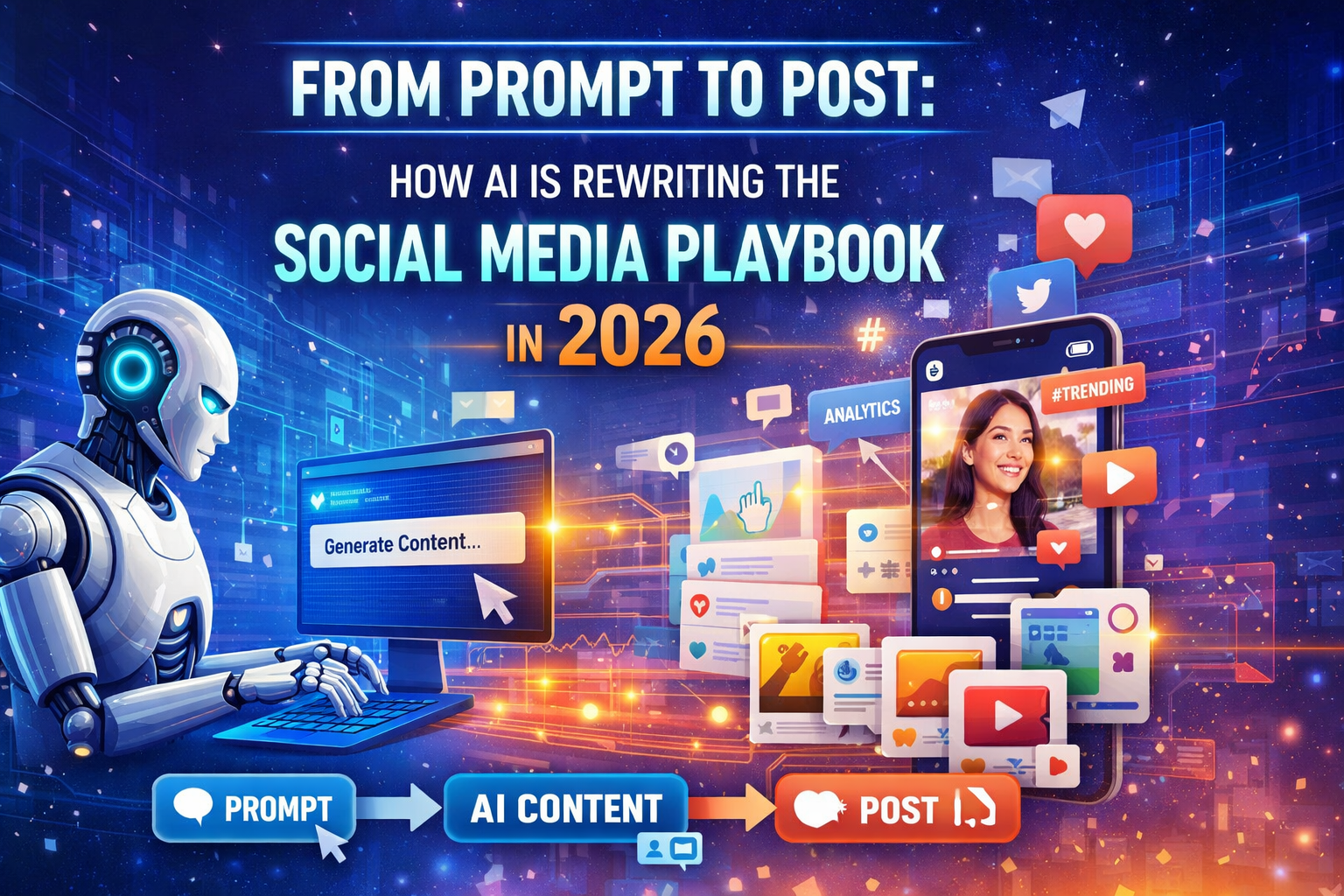
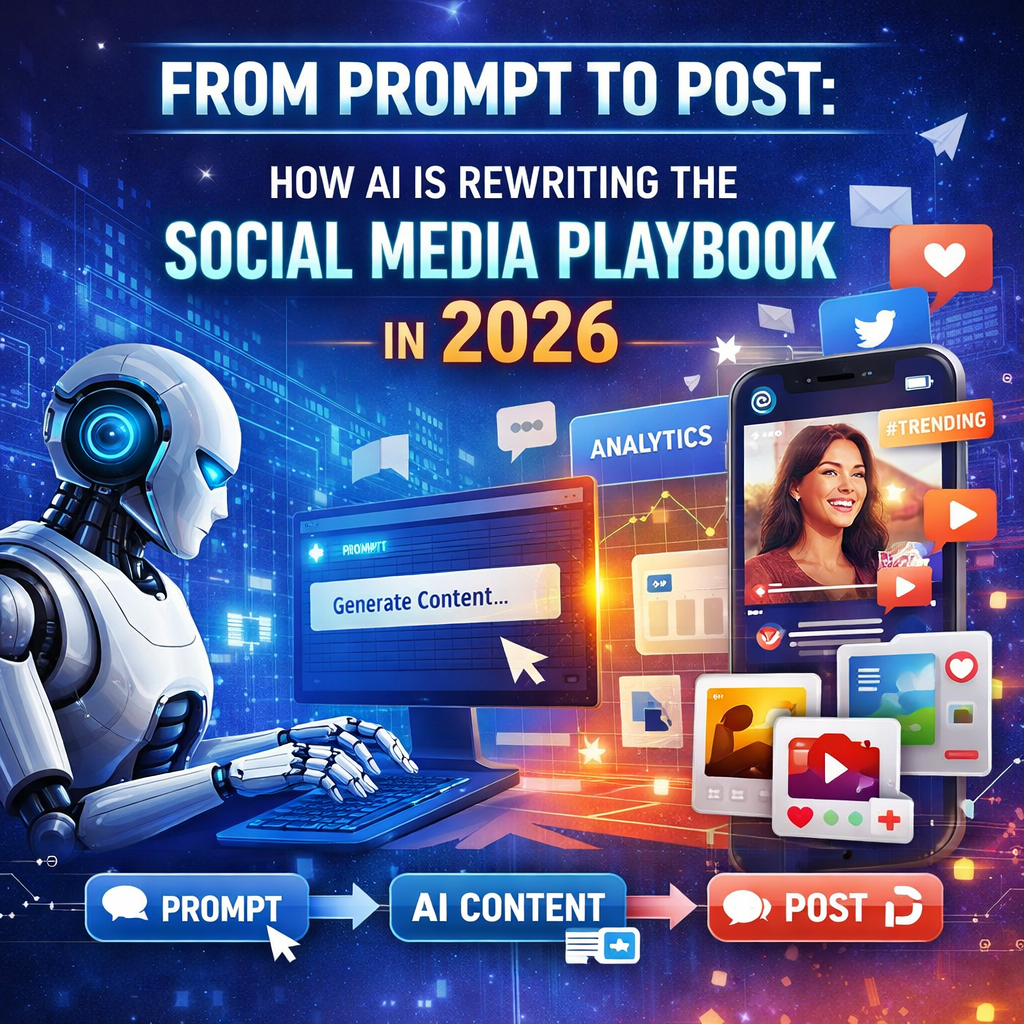
Welcome to the era of “prompt to post,” where a single well-crafted instruction can generate high-performing content, optimize distribution, and even predict engagement outcomes. In this article, we’ll explore how AI is transforming social media marketing, what it means for brands and marketers, and how you can stay ahead in this new playbook.
The Rise of AI-Driven Social Media Marketing
AI is no longer a novelty in marketing—it’s the backbone of modern digital strategy. In 2026, AI tools are embedded across every stage of the social media lifecycle:
- Content ideation
- Copywriting and design
- Video generation
- Audience targeting
- Performance analytics
- Community engagement
The shift is clear: marketers are moving from manual execution to strategic orchestration. Instead of creating everything from scratch, they are guiding AI systems with prompts, refining outputs, and focusing on higher-level creative direction.
From Prompt to Post: What It Really Means
The phrase “prompt to post” encapsulates the streamlined workflow enabled by AI:
- Prompt Creation – Marketers input a structured instruction (tone, audience, format, platform).
- Content Generation – AI produces captions, visuals, hashtags, and even video clips.
- Optimization – Algorithms refine content based on platform trends and audience behavior.
- Scheduling & Publishing – Automated tools distribute content at optimal times.
- Performance Feedback Loop – AI analyzes engagement and suggests improvements.
This process dramatically reduces production time while increasing output quality and consistency.
Key Ways AI Is Rewriting the Social Media Playbook
1. Hyper-Personalized Content at Scale
Gone are the days of one-size-fits-all posts. AI enables brands to create highly personalized content tailored to micro-segments of their audience.
- Dynamic captions based on user behavior
- Personalized video variations
- AI-driven audience segmentation
- Real-time content adaptation
Why it matters: Personalized content drives higher engagement, stronger brand loyalty, and better conversion rates.
2. AI-Powered Content Creation (Text, Image, and Video)
AI tools can now generate:
- Scroll-stopping visuals
- Short-form videos optimized for platforms like TikTok and Instagram Reels
- Long-form captions and threads
- Carousel posts and infographics
What used to take a full creative team can now be executed by a single marketer with the right AI stack.
Trend to watch: AI-generated video content is becoming indistinguishable from human-created media, making video marketing more accessible than ever.
3. Predictive Analytics and Smart Optimization
AI doesn’t just create content—it predicts how it will perform.
Modern tools can analyze:
- Best posting times
- Optimal caption length
- Trending topics
- Hashtag effectiveness
- Audience sentiment
This allows marketers to make data-driven decisions before hitting “publish.”
4. Real-Time Trend Adaptation
Social media trends move fast—sometimes within hours. AI enables brands to stay agile by:
- Monitoring trending topics in real time
- Suggesting relevant content angles
- Auto-generating posts aligned with current conversations
Example: A trending meme format can be adapted instantly to fit your brand voice and messaging.
5. Conversational AI and Community Management
AI-powered chatbots and assistants are now handling:
- Comment responses
- Direct messages
- Customer inquiries
- Lead qualification
But in 2026, these interactions feel more human than ever, thanks to advanced natural language processing.
Result: Faster response times, improved customer experience, and scalable engagement.
6. AI-Driven Influencer and Creator Collaboration
Finding the right influencers is no longer guesswork. AI tools can:
- Identify creators aligned with your brand
- Analyze audience authenticity
- Predict campaign ROI
- Recommend collaboration strategies
This ensures smarter partnerships and better results.
7. Automated A/B Testing at Scale
AI continuously tests variations of content:
- Headlines
- Visuals
- CTAs
- Formats
Instead of running one or two tests, brands can run hundreds simultaneously—and automatically deploy the best-performing versions.
The Benefits of AI in Social Media Marketing
Speed and Efficiency
AI drastically reduces the time required to create and publish content, allowing teams to focus on strategy.
Cost Reduction
Fewer resources are needed for content production, making high-quality marketing accessible to businesses of all sizes.
Consistency
AI ensures brand voice, tone, and visual identity remain consistent across platforms.
Scalability
Brands can produce more content without sacrificing quality.
Data-Driven Decision Making
AI removes guesswork by providing actionable insights backed by real-time data.
The Challenges and Limitations of AI
While AI offers significant advantages, it’s not without its challenges.
1. Over-Automation Risks
Relying too heavily on AI can lead to generic or repetitive content that lacks authenticity.
2. Brand Voice Dilution
Without proper guidance, AI-generated content may not fully align with your brand identity.
3. Ethical Concerns
Issues such as misinformation, deepfakes, and transparency are ongoing concerns.
4. Platform Dependency
AI tools often rely on platform algorithms, which can change unpredictably.
Human + AI: The Winning Formula
The most successful brands in 2026 are not replacing humans with AI—they are combining both.
Human role:
- Strategy
- Creativity
- Emotional intelligence
- Brand storytelling
AI role:
- Execution
- Optimization
- Data analysis
- Scalability
This hybrid approach ensures content remains authentic while leveraging the efficiency of AI.
How to Adapt Your Social Media Strategy in 2026
1. Master Prompt Engineering
Your ability to guide AI effectively is now a core marketing skill. Strong prompts lead to better outputs.
Tips:
- Be specific about tone, audience, and format
- Include examples when possible
- Iterate and refine
2. Build an AI-First Content Workflow
Integrate AI into every stage of your process:
- Ideation
- Creation
- Scheduling
- Analytics
This creates a seamless and efficient system.
3. Focus on Storytelling and Authenticity
AI can generate content—but it can’t replicate genuine human experiences.
Use AI as a tool, not a replacement for your brand’s voice.
4. Stay Agile and Trend-Aware
Leverage AI tools to monitor trends and adapt quickly, but ensure relevance to your audience.
5. Invest in the Right Tools
Not all AI tools are created equal. Choose platforms that align with your goals and integrate well with your existing systems.
The Future of Social Media Marketing with AI
Looking ahead, AI will continue to evolve and reshape the landscape even further.
Emerging trends:
- Fully autonomous content systems
- AI-generated virtual influencers
- Real-time content personalization at the individual level
- Voice and conversational social media interfaces
The brands that thrive will be those that embrace innovation while maintaining authenticity.
Final Thoughts
The shift from “prompt to post” represents a fundamental transformation in how social media marketing is executed. AI is not just a tool—it’s a strategic partner that enables faster, smarter, and more impactful marketing.
However, success in 2026 isn’t about automation alone. It’s about finding the right balance between technology and human creativity.
Marketers who learn to harness AI effectively—while staying true to their brand voice—will lead the next wave of digital innovation.