Marketing has always evolved alongside technology. From print to radio, television to search engines, and social media to data-driven personalization, every shift has redefined how brands grow. Today, we stand at the edge of another major inflection point—autonomous marketing powered by AI agents.
The question is no longer if artificial intelligence will play a role in marketing, but how deeply it will reshape strategy, execution, and scale. Autonomous marketing systems promise to operate with minimal human intervention, learning continuously, optimizing campaigns in real time, and making decisions at machine speed.
But does this mean AI agents are truly the future of scalable growth—or is this just another overhyped trend?
Let’s break it down.
What Is Autonomous Marketing?
Autonomous marketing refers to the use of AI-powered agents and systems that can plan, execute, optimize, and adapt marketing activities independently, based on predefined goals and real-time data.
Unlike traditional marketing automation—which relies heavily on rules, workflows, and manual oversight—autonomous marketing systems:
Learn from outcomes continuously
Make decisions without waiting for human input
Adjust messaging, targeting, timing, and spend dynamically
Operate across channels simultaneously
Think of autonomous marketing as the shift from “automated execution” to “self-directed strategy at scale.”
AI Agents vs. Traditional Marketing Automation
To understand why autonomous marketing is such a leap forward, it’s important to distinguish AI agents from the automation tools most businesses use today.
Traditional Automation:
AI Agents:
Goal-oriented decision-making
Continuous learning and adaptation
Predictive and prescriptive behavior
Cross-channel optimization without silos
In short, automation follows instructions.
AI agents pursue outcomes.
This distinction is critical when discussing scalable growth.
Why Scalability Is Breaking Traditional Marketing Models
Most marketing teams hit the same ceiling:
More growth requires more campaigns
More campaigns require more people
More people increase costs, complexity, and inconsistency
This linear relationship between effort and output is fundamentally unscalable.
Autonomous marketing flips this equation.
AI agents can:
Run thousands of micro-experiments simultaneously
Optimize spend and creative in real time
Operate 24/7 without burnout
Scale personalization without scaling headcount
The result? Nonlinear growth potential.
Core Capabilities of Autonomous Marketing Systems
To understand whether AI agents truly represent the future, let’s examine what they can already do—and where they’re heading.
1. Autonomous Campaign Management
AI agents can:
Launch campaigns based on performance signals
Adjust budgets dynamically across platforms
Pause underperforming ads instantly
Reallocate spend toward high-converting segments
This eliminates lag time between insight and action.
2. Predictive Audience Targeting
Rather than relying on historical segments, AI agents:
Identify high-intent users before they convert
Predict churn risk and upsell opportunities
Continuously refine audience definitions
This leads to better efficiency and higher lifetime value.
3. Creative Optimization at Scale
AI agents can test:
Headlines, visuals, CTAs, formats, and tones
Channel-specific variations automatically
Emotional and behavioral triggers
Over time, the system learns why creative works—not just what works.
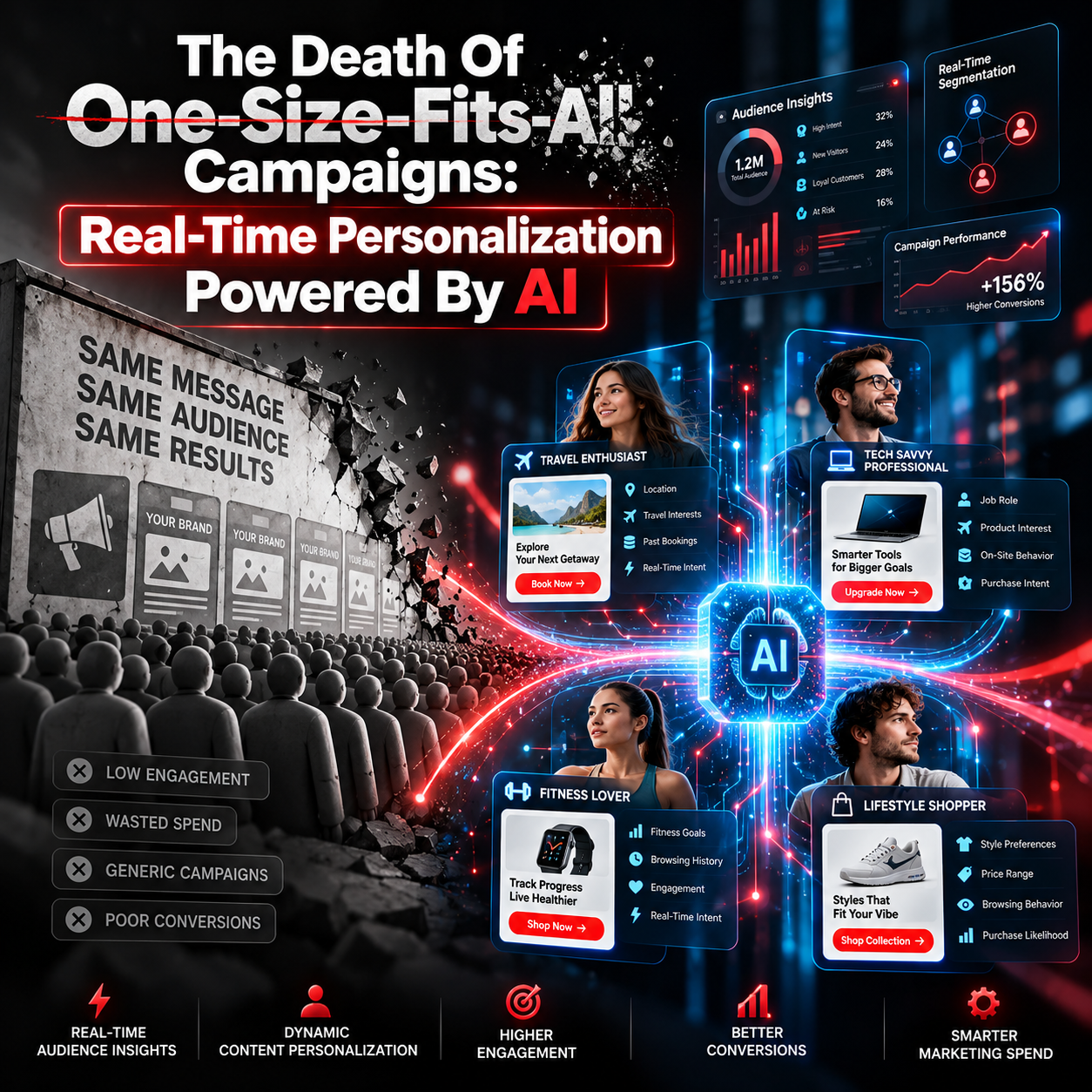
4. Real-Time Personalization
Autonomous marketing enables:
One-to-one messaging at scale
Dynamic content across email, ads, landing pages, and social
Context-aware interactions based on behavior and intent
Personalization becomes systemic, not manual.
The Strategic Shift: From Marketers as Executors to Architects
One of the biggest misconceptions about AI agents is that they replace marketers.
In reality, they elevate the role of marketers.
As execution becomes autonomous, human teams shift toward:
Defining goals and guardrails
Shaping brand voice and values
Interpreting insights and strategic signals
Making high-level decisions AI cannot contextualize
The future marketer is less operator and more systems architect.
Risks and Limitations of Autonomous Marketing
Despite its promise, autonomous marketing is not without risks.
1. Brand Integrity and Voice
Without proper guardrails, AI agents can:
Human oversight remains essential.
2. Data Quality and Bias
AI agents are only as good as:
Poor data leads to poor decisions—at scale.
3. Ethical and Transparency Concerns
As AI agents make more decisions:
Transparency becomes critical
Accountability must be clearly defined
Trust must be earned, not assumed
Autonomous does not mean ungoverned.
Where Autonomous Marketing Works Best Today
Autonomous marketing is already proving effective in areas such as:
Paid media optimization (Google, Meta, programmatic ads)
Email and lifecycle marketing
Ecommerce personalization
Lead scoring and nurturing
Performance-driven content testing
In these environments, clear goals + measurable outcomes make autonomy highly effective.
The Role of Human-Centric Strategy in an Autonomous World
Here’s the paradox:
The more autonomous marketing becomes, the more human-centered strategy matters.
AI agents optimize for efficiency—but humans define meaning.
Brands that win will:
Use AI for speed and scale
Use humans for empathy and direction
Balance automation with authenticity
Technology does not replace trust.
It amplifies whatever values guide it.
The Future: Hybrid Intelligence, Not Full Autonomy
The future of scalable growth isn’t fully autonomous marketing—it’s hybrid intelligence.
This means:
AI agents handle execution and optimization
Humans handle vision, ethics, creativity, and relationships
Systems are designed for collaboration, not replacement
Businesses that embrace this model will move faster, smarter, and more sustainably than those stuck in manual workflows—or those who blindly hand everything over to machines.
Final Verdict: Are AI Agents the Future of Scalable Growth?
Yes—but not in the way most people think.
AI agents are not the future instead of marketers.
They are the future with marketers.
Autonomous marketing represents a fundamental shift:
From manual effort to intelligent systems
From reactive optimization to predictive growth
From linear scaling to exponential potential
The brands that win won’t ask, “Can AI replace us?”
They’ll ask, “How do we design systems that scale our best thinking?”
That’s where real growth begins.