



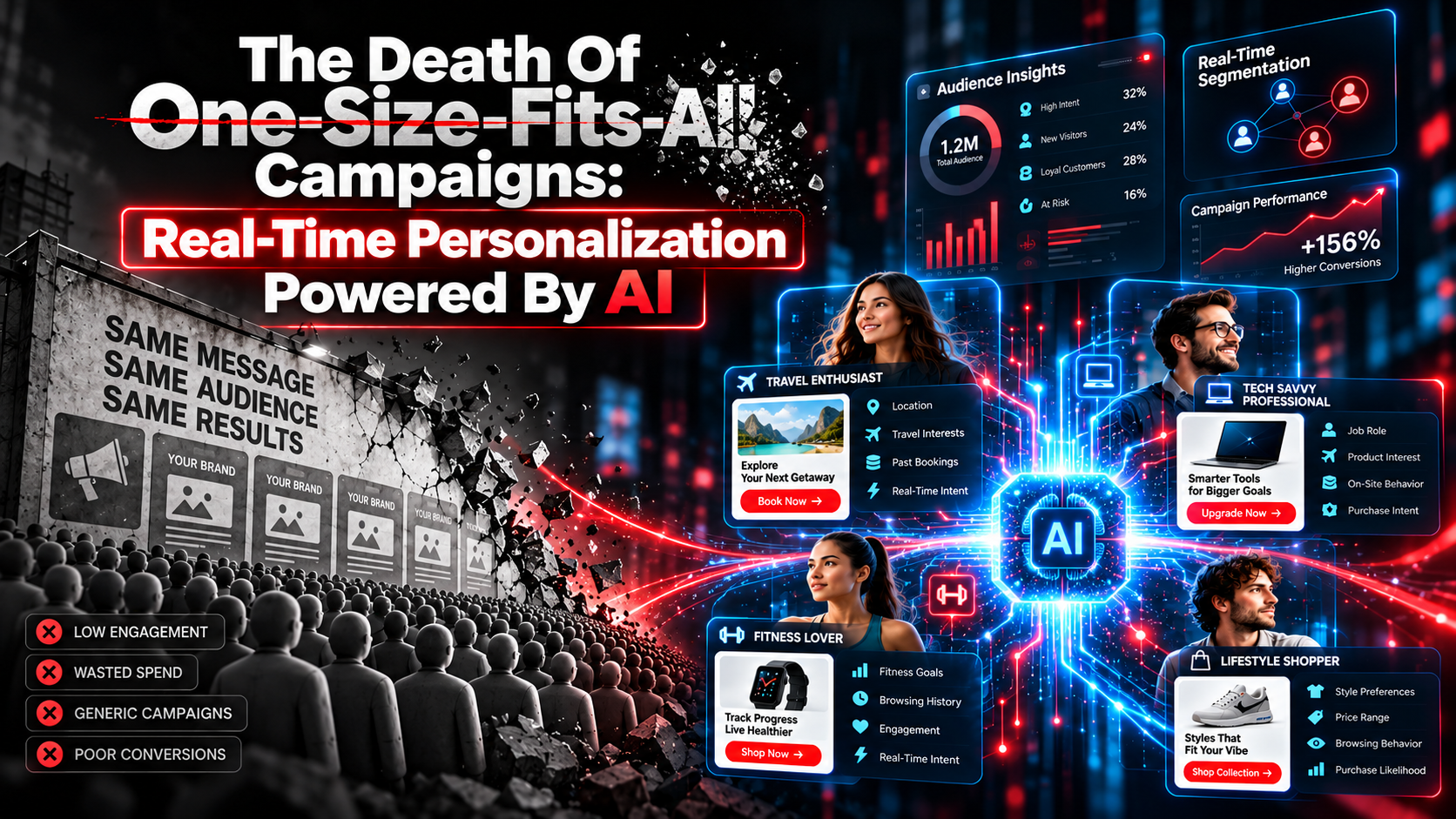

That approach worked when consumers had fewer choices, digital platforms were less sophisticated, and personalization meant inserting someone’s first name into an email.
But the marketing landscape has fundamentally changed.
Today’s consumers navigate an increasingly fragmented digital ecosystem where thousands of brands compete for their attention. They expect businesses to understand their preferences, anticipate their needs, and deliver relevant experiences without unnecessary friction.
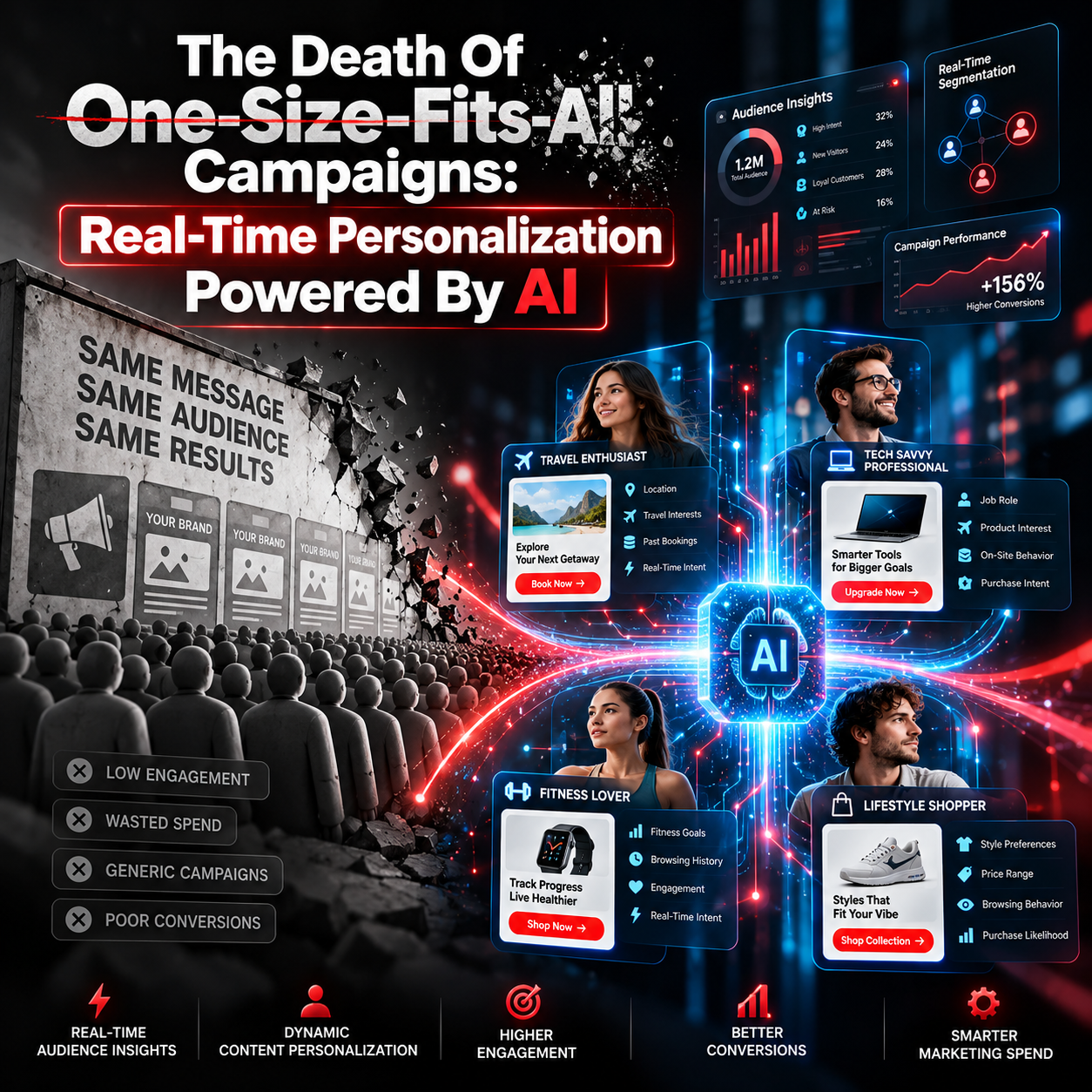
The era of one-size-fits-all marketing campaigns is coming to an end.
In its place, artificial intelligence is accelerating a new approach: real-time marketing personalization.
Rather than delivering identical advertisements, emails, website experiences, and promotional messages to everyone, businesses can increasingly use AI to adapt customer interactions based on behavioral signals, contextual information, and predictive insights.
For businesses in St. Louis and beyond, this evolution presents a significant opportunity to improve customer engagement, strengthen relationships, and make marketing investments more effective.
However, successful AI-powered personalization requires more than technology. It demands a thoughtful combination of intelligent automation, responsible data practices, strategic marketing expertise, and human creativity.
Let’s explore how this transformation is reshaping digital marketing and what businesses must do to remain competitive.
AI-powered real-time personalization is the process of using artificial intelligence, customer data, and automated decision-making systems to tailor marketing experiences dynamically based on individual behaviors, preferences, and contextual signals.
Traditional personalization typically relies on predefined audience segments.
For example, a business might create separate email campaigns for new customers, returning customers, and inactive subscribers.
Although this represents an improvement over mass marketing, it still assumes that everyone within a particular segment has similar needs.
AI-powered personalization takes this approach further.
Instead of relying exclusively on static customer categories, AI systems can analyze changing signals and determine which content, products, recommendations, or messages may be most relevant at a particular moment.
These signals might include:
Website browsing behavior and previous interactions.
Purchase history and expressed product preferences.
Geographic location and local market conditions.
Engagement with emails, advertisements, and social content.
Customer lifecycle stage and recent activity.
Contextual signals such as device type or referral source.
For example, imagine two potential customers visiting the same St. Louis home improvement company’s website.
One visitor has been researching kitchen remodeling options for several weeks. Another is exploring emergency plumbing services for the first time.
A traditional website might display identical promotional content to both visitors.
An AI-powered personalization system could instead highlight kitchen remodeling portfolios and consultation opportunities for the first visitor while prioritizing urgent plumbing assistance for the second.
The website becomes more responsive to customer intent.
The objective is not simply to personalize marketing messages. It is to make every meaningful customer interaction more relevant.
Mass marketing isn’t disappearing entirely. Broad awareness campaigns, brand storytelling, and major product launches still benefit from reaching large audiences with consistent messaging.
The problem arises when businesses apply that same generic approach throughout the entire customer journey.
Consumers do not all share the same motivations, buying timelines, challenges, or expectations.
Yet many marketing campaigns continue treating them as though they do.
A first-time website visitor and a loyal customer should not necessarily receive the same message.
Someone unfamiliar with a business may need education, credibility, and reassurance.
An existing customer may respond better to relevant recommendations, loyalty benefits, or information about complementary services.
When campaigns ignore these differences, businesses risk presenting information that doesn’t align with the customer’s immediate needs.
Traditional marketing segmentation often relies on broad demographic categories such as age, income, industry, or geographic location.
These characteristics can provide useful context, but they don’t always reveal what someone wants right now.
A customer researching a service today may be ready to purchase tomorrow.
Another customer who previously demonstrated strong interest may no longer be actively considering a purchase.
AI-assisted behavioral analysis can help marketers identify these changes and respond more appropriately.
Customers regularly move between websites, search engines, social platforms, email, and direct conversations.
When marketing systems operate independently, businesses struggle to maintain continuity.
A potential customer might complete a consultation request but continue receiving advertisements encouraging them to submit the same form.
These disconnected experiences can create frustration and waste advertising resources.
Integrated personalization systems can help coordinate customer interactions across channels.
Traditional campaign optimization often involves reviewing performance reports, identifying patterns, and making adjustments days or weeks later.
That process remains valuable, but some opportunities require faster decisions.
AI can help evaluate engagement signals and recommend or execute predefined adjustments more quickly.
This doesn’t eliminate the need for marketing professionals. It allows them to focus more attention on strategy, creative development, and performance oversight.
AI-powered personalization combines several technologies that work together to understand customer behavior and determine relevant next actions.
AI personalization workflow
Customer signals
Browsing, engagement, purchase history and contextual data
AI analysis and predictions
Identify intent, preferences and likely next actions
Personalized experience
Relevant content, offers, recommendations or messaging
Measurement and optimization
Evaluate outcomes and improve future decisions
Predictive analytics uses historical and current data to estimate potential customer behaviors.
For example, an AI model might identify customers who are more likely to request a consultation, make a repeat purchase, or disengage from a service.
Marketers can use these predictions to prioritize outreach and develop more relevant campaigns.
Importantly, predictions are probabilities rather than guarantees. They require ongoing validation and responsible interpretation.
Machine learning algorithms can identify behavioral patterns that traditional segmentation may overlook.
Instead of relying solely on manually defined customer groups, businesses can analyze combinations of interactions that suggest shared interests or buying intent.
These insights can support more precise messaging and audience development.
Generative AI adds another dimension to personalization.
Businesses can use it to create variations of advertising copy, email messaging, product descriptions, and website content for different audience needs.
For example, a digital marketing agency might develop different messaging for a startup seeking brand awareness and an established business focused on improving lead quality.
However, AI-generated content should follow approved brand guidelines and undergo appropriate human review.
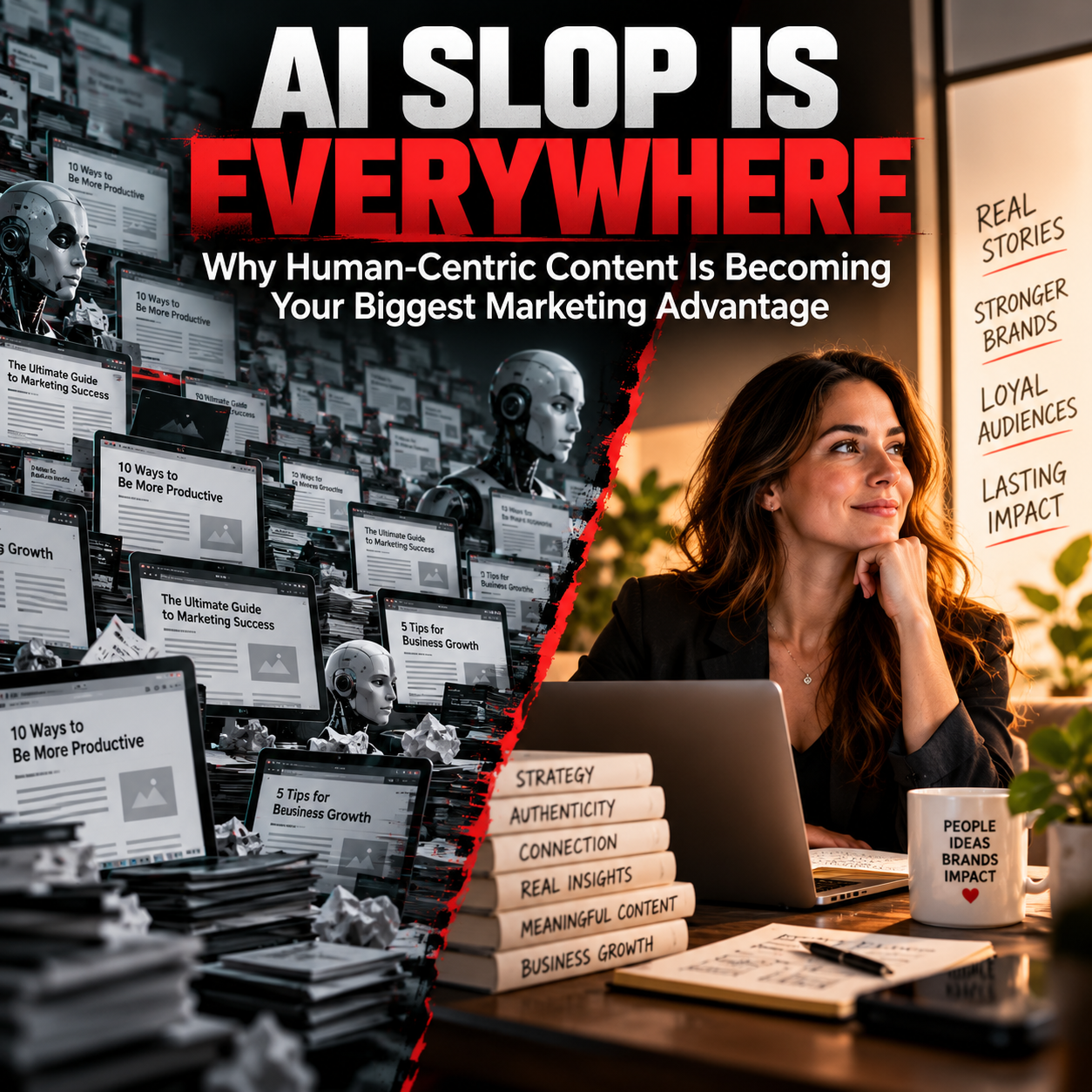
Personalization should enhance authenticity, not replace it with endless variations of generic AI-generated material.
Marketing automation platforms can connect customer signals with predefined actions.
A visitor who downloads a website development guide might receive educational follow-up content, while someone who requests a proposal moves into a sales-focused communication sequence.
AI can help refine these workflows by identifying relevant content and appropriate engagement opportunities.
Together, these capabilities allow businesses to create more adaptive marketing experiences.
The practical applications of AI personalization extend across nearly every major digital marketing channel.
A business website is often the central destination for digital marketing traffic.
Yet many websites still present the same homepage, calls to action, and service information regardless of visitor intent.
AI-assisted personalization can help businesses display more relevant content based on known preferences, referral sources, or previous interactions.
A returning visitor researching SEO services might encounter related case studies and consultation opportunities.
A first-time visitor could instead see an introduction to the company, its capabilities, and customer testimonials.
This creates a more contextual experience without requiring entirely separate websites.
Email marketing has long supported segmentation and automated workflows.
AI introduces additional opportunities to refine messaging, content recommendations, and engagement timing.
Businesses can analyze which topics interest subscribers, identify declining engagement, and test different content variations.
Instead of sending identical promotional emails to an entire database, marketers can deliver messages that better reflect customer interests and lifecycle stages.
Platforms such as Google Ads and Meta Ads use machine learning in various aspects of advertising delivery and optimization.
These capabilities can help advertisers identify relevant audiences, optimize bidding, and evaluate creative performance.
Businesses can complement platform automation with stronger first-party data, meaningful conversion tracking, and carefully developed creative assets.
However, advertisers must still monitor lead quality, acquisition costs, and business outcomes rather than assuming automated delivery guarantees profitability.
E-commerce businesses can use recommendation systems to suggest products based on customer interests and shopping behavior.
For example, someone browsing professional photography equipment might receive recommendations for compatible accessories rather than unrelated merchandise.
Relevant recommendations can improve product discovery and create opportunities for additional purchases.
The best systems balance commercial objectives with genuine customer usefulness.
AI-powered conversational systems can help customers locate information, explore services, and receive assistance outside traditional business hours.
When connected to appropriate business knowledge and customer systems, these tools can provide more contextual responses.
Nevertheless, human support remains essential for complicated, sensitive, or high-value interactions.
The strongest customer experiences combine the responsiveness of AI with the empathy and judgment of people.
As businesses adopt increasingly sophisticated personalization technology, an important question emerges:
Does more automation automatically create better customer relationships?
Not necessarily.
Artificial intelligence can identify patterns, generate content, and recommend actions, but it does not inherently understand the emotional complexity of human relationships.
Customers want more than messages that appear mathematically relevant.
They want transparency, trust, authenticity, and meaningful experiences.
An overly aggressive personalization strategy can create the opposite effect.
Imagine visiting a website and immediately receiving messaging that reveals an unexpectedly detailed understanding of your previous online behavior.
Even if the recommendation is accurate, the experience may feel intrusive.
This is why responsible personalization requires clear boundaries.
Businesses should prioritize consent, data minimization, privacy safeguards, and transparency about how customer information is used.
They should also avoid making sensitive assumptions about individuals based on behavioral signals.
Human marketers play a critical role in defining these standards.
They determine whether a campaign aligns with brand values, whether a message is appropriate, and whether personalization genuinely improves the customer experience.
AI can accelerate execution.
Human expertise provides context, creativity, accountability, and strategic direction.
The future of effective digital marketing isn’t artificial intelligence replacing human intelligence.
It’s artificial intelligence amplifying human intelligence.
AI-powered personalization isn’t exclusively available to national retailers and enterprise organizations.
Small and midsize businesses throughout St. Louis, St. Charles, Chesterfield, Clayton, and the surrounding Missouri region can also benefit from more relevant customer experiences.
The key is implementing personalization strategically rather than attempting to automate everything simultaneously.
Consider a few practical examples.
A St. Louis accounting firm could develop separate educational content journeys for small business owners, independent contractors, and individuals researching tax preparation services.
Website interactions and voluntarily provided information could help determine which resources are most useful.
A roofing, HVAC, or remodeling business could tailor landing page content based on the service a visitor is researching.
Someone seeking emergency repairs should encounter different messaging than someone planning a long-term renovation.
With appropriate privacy protections and compliance review, providers could personalize general educational content and appointment information based on explicitly stated interests.
Sensitive health information should not be casually incorporated into advertising personalization or shared with marketing systems.
A St. Louis manufacturing or professional services company could tailor follow-up content based on the industries, services, or business challenges prospects have expressed interest in.
This approach can help sales teams conduct more relevant conversations.
For local businesses, the competitive advantage often comes from understanding customer intent more effectively—not from deploying the most expensive AI platform.
Successful real-time personalization requires a structured implementation plan.
Businesses should avoid purchasing technology before identifying the customer experience problems they want to solve.
Begin by defining measurable outcomes.
Are you trying to increase qualified leads, improve website conversion rates, strengthen customer retention, or reduce wasted advertising spend?
Different objectives require different personalization strategies.
Review the information currently available through your website analytics, customer relationship management platform, email marketing software, and advertising systems.
Identify gaps, duplicate records, and disconnected tools.
Reliable personalization depends on accurate, appropriately collected information.
Rather than personalizing every interaction immediately, focus on one or two opportunities with clear business value.
Examples include improving service landing pages, developing targeted email follow-ups, or recommending relevant educational content.
Platforms such as HubSpot, Salesforce and various marketing automation solutions offer capabilities that can support personalization.
However, feature availability, integration requirements, and costs vary considerably.
Small businesses should prioritize manageable solutions that integrate with their existing systems.
Create messaging variations that address genuine differences in customer needs.
Maintain consistent branding, accurate information, and clear calls to action.
AI can assist with content development, but marketers should review outputs for quality and relevance.
Personalization should be evaluated through measurable outcomes rather than assumptions.
Useful metrics include:
Website conversion rate and qualified lead volume.
Email click-through rates and downstream conversions.
Customer acquisition cost and lead-to-customer conversion rate.
Customer retention and repeat purchase behavior.
Revenue per visitor or customer, where applicable.
Controlled testing can help determine whether personalized experiences actually outperform generic alternatives.
Although the opportunities are significant, businesses must recognize the limitations and risks.
Data quality: Inaccurate or incomplete customer information can produce irrelevant recommendations and unreliable predictions.
Privacy and compliance: Personalization must respect applicable privacy laws, consent requirements, platform policies, and customer expectations.
Technology integration: Disconnected customer databases and marketing platforms can make real-time personalization difficult to implement.
Algorithmic bias: AI models may produce uneven outcomes when trained on unrepresentative data or optimized against poorly selected objectives.
Overautomation: Excessive reliance on automated messaging can weaken brand personality and make customer interactions feel impersonal.
Measurement complexity: Businesses must distinguish genuine improvements caused by personalization from changes driven by seasonality, audience composition, or other external factors.
These challenges reinforce the importance of implementing AI as part of a broader marketing strategy rather than treating it as a shortcut to growth.
The next evolution of digital marketing will increasingly involve systems that not only respond to customer behavior but also anticipate relevant needs.
Advances in predictive analytics, generative AI, and agentic AI could enable more coordinated experiences across websites, email, advertising, and customer service.
Imagine a marketing system that recognizes an emerging pattern of customer interest, identifies an appropriate educational resource, recommends a campaign adjustment, and presents the decision to a marketing professional for approval.
Instead of waiting for a weekly performance review, businesses could respond to meaningful opportunities much sooner.
Agentic AI may eventually automate more of these processes within clearly defined boundaries.
However, the ability to automate a decision doesn’t automatically mean that decision should be automated.
Businesses will still need governance, performance monitoring, human accountability, and clear safeguards.
As these technologies mature, competitive advantage may depend less on access to AI tools and more on how thoughtfully businesses use them.
Organizations that combine quality data, strategic creativity, responsible automation, and customer empathy will be better positioned to create valuable experiences.
One-size-fits-all marketing campaigns are becoming increasingly inadequate for businesses that want to build meaningful customer relationships across complex digital journeys.
Consumers have different motivations, expectations, and buying timelines.
Modern marketing strategies must recognize those differences.
AI-powered real-time personalization gives businesses the opportunity to deliver more relevant content, improve customer engagement, optimize marketing resources, and create more responsive digital experiences.
But technology alone isn’t the answer.
The most effective personalization strategies are built around genuine customer understanding, thoughtful implementation, and measurable business objectives.
For St. Louis businesses navigating an increasingly competitive digital landscape, now is the time to evaluate how AI can strengthen—not replace—the human elements of marketing.
The businesses that succeed won’t necessarily be those using the most AI.
They’ll be the ones using AI most effectively to understand and serve their customers.
The future of marketing isn’t about reaching everyone with the same message. It’s about delivering the right experience to the right person at the right moment.
At Razor Sharp Digital, we believe successful digital marketing combines innovative technology, strategic thinking, and human-centric experiences.
Whether you’re looking to improve your website, strengthen your digital marketing strategy, generate more qualified leads, or explore how artificial intelligence can support your business growth, the right approach starts with understanding your customers.
Stop relying on generic marketing experiences and start building meaningful digital connections.
AI-powered personalization uses artificial intelligence and customer data to tailor website experiences, advertising, emails, and other marketing interactions based on customer preferences, behaviors, and contextual signals.
Real-time personalization can improve marketing performance by delivering more relevant messages and reducing unnecessary friction throughout the customer journey. Actual results depend on data quality, implementation, and testing.
Yes. Small businesses can begin with accessible tools such as CRM automation, behavior-based email workflows, personalized landing pages, and AI-assisted content recommendations without investing in enterprise-level infrastructure.
Traditional personalization typically uses broad audience segments or predefined customer attributes. Hyper-personalization uses more granular behavioral and contextual information to tailor experiences at an individual level, often with the assistance of AI.
Costs vary depending on the technology, available customer data, integration requirements, and complexity of the personalization strategy. Many businesses can begin with existing marketing automation capabilities before investing in advanced systems.
A St. Louis business can begin by auditing its website, CRM, analytics, and marketing campaigns. Identifying a high-value customer journey and testing one targeted personalization improvement provides a practical starting point.
Learn about strategic human marketing and how it can benefit your business.
Download for FREE TODAY!
Get all the latest content, news, and digital marketing insights to help you humanize your brand.
Join thousands getting our insider updates learning how to grow their business using AI + human centricity.
(P.S. We will NEVER sell your personal data to anyone like the other guys do)
Your company needs humanization and personalization in order for it to thrive and grow. Our systematic, strategic, and seasoned approach will help you thrive and grow. Let’s discuss ways we can help your business become more human-centric so you can dominate.
The main entrance to our primary domain.
The 10 commandments that we live by, practice by, and service our customers. The Holy Grail of our entire philosophy if you’d like to call it that.
The digital and social media vault where we share our insights, experiences, and advice on how to humanize your brand so you can thrive and grow.
A full breakdown of all of our service offerings in the digital and social media spectrum.
How it all started, our story, and who is behind this human marketing agency.
Are you a natural-born superstar? Looking to make a global impact? We are always seeking aspiring rockstars to join our team.
The best way to get in touch with us about your digital and social media needs.