

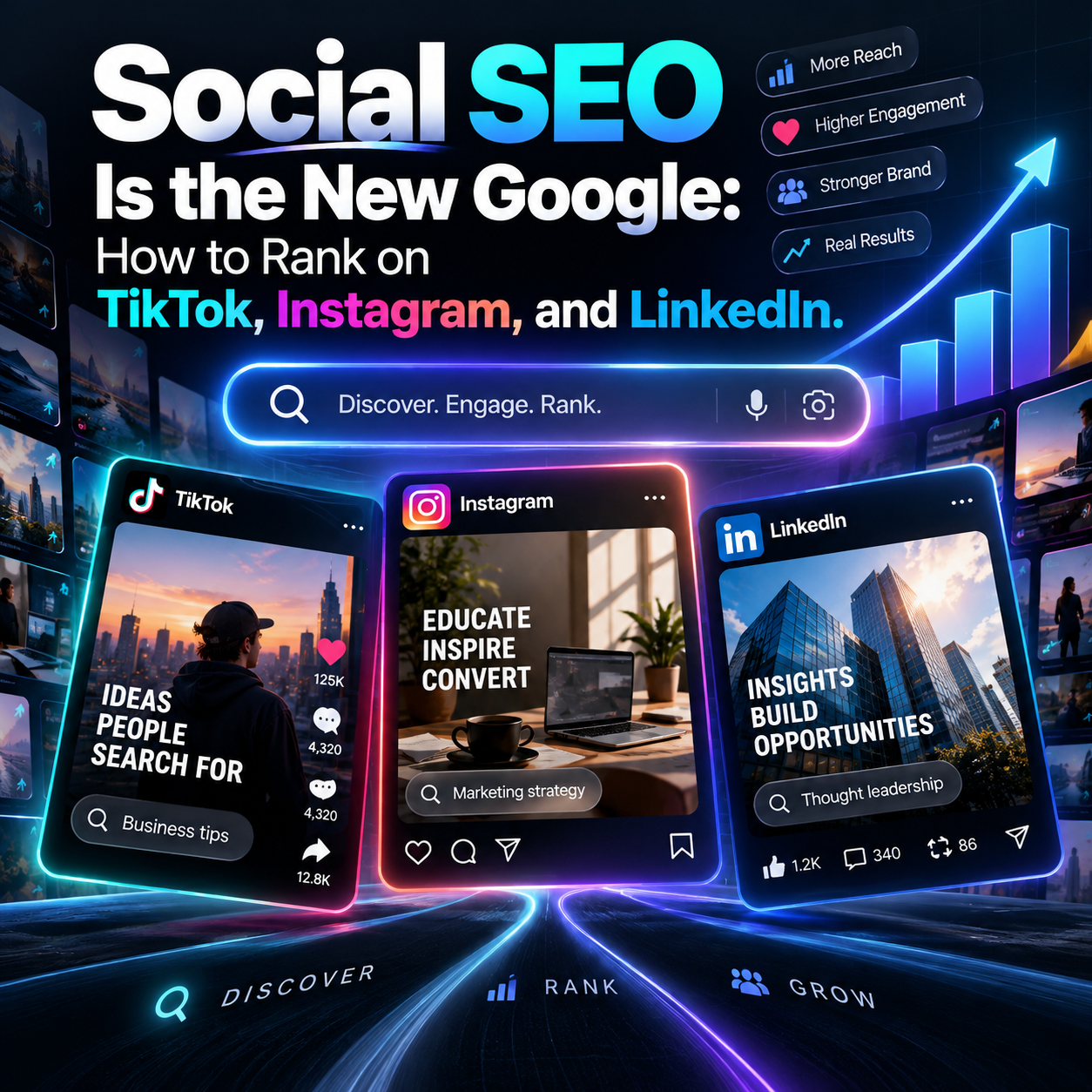


Search engine optimization is no longer confined to Google. The way consumers discover brands, research products, evaluate services, and make purchasing decisions is evolving rapidly. Social media platforms such as TikTok, Instagram, and LinkedIn are becoming powerful discovery engines, fundamentally changing how businesses approach online visibility.
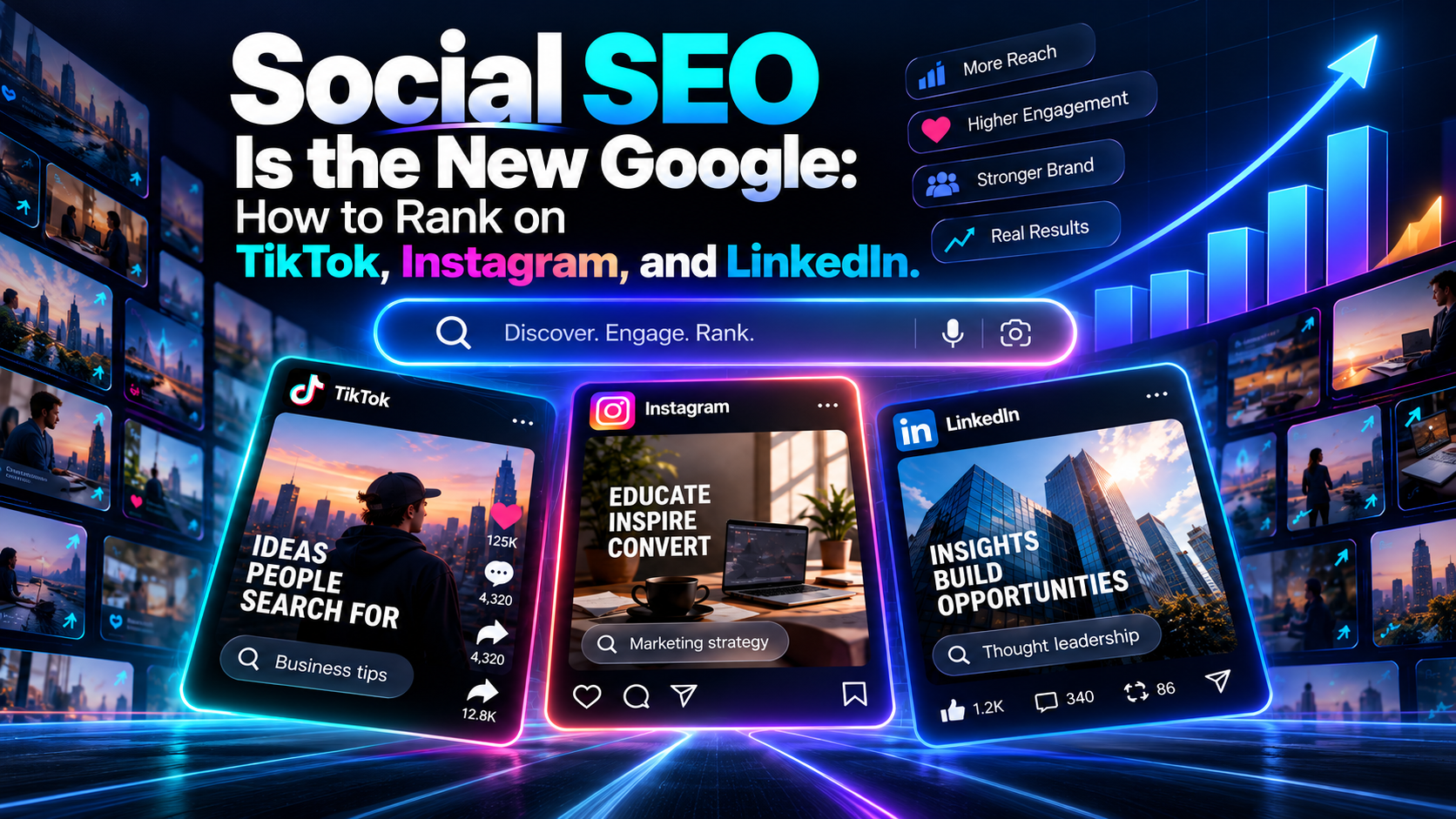

Welcome to the era of Social SEO, where discoverability extends beyond traditional search engines and into the feeds, search bars, videos, and conversations that influence everyday decisions.
For businesses competing in today’s digital marketplace, ranking on Google is still important. However, appearing in relevant TikTok searches, Instagram results, and LinkedIn conversations is becoming an equally valuable component of a comprehensive digital marketing strategy.
The challenge? Each platform operates differently, with its own ranking signals, content preferences, audience behaviors, and engagement patterns.
Businesses that understand these differences can create a significant competitive advantage.
At Razor Sharp Digital, we believe the future of digital marketing isn’t about choosing between traditional SEO and social media marketing. It’s about integrating both to build a stronger, more discoverable digital presence.
In this article, we’ll explore how Social SEO works, why it matters in 2026, and the strategies businesses can use to increase visibility across TikTok, Instagram, and LinkedIn.
Social SEO, or social search engine optimization, is the practice of optimizing social media content, profiles, captions, keywords, hashtags, and engagement signals to improve visibility within social platforms’ search and recommendation systems.
Unlike traditional SEO, which primarily focuses on website architecture, crawlability, indexation, backlinks, and search engine relevance, Social SEO concentrates on making content discoverable where audiences already spend their time.
Think about how consumer behavior has changed.
Someone looking for a new restaurant might search TikTok for authentic dining experiences. A business owner researching marketing agencies might explore Instagram portfolios. A corporate decision-maker evaluating digital transformation solutions might search LinkedIn for industry experts.
These behaviors represent different search journeys, but they share one fundamental characteristic: People increasingly use social media to find answers, evaluate credibility, and make informed decisions.
Traditional SEO | Social SEO |
|---|---|
Optimizes websites for search engines | Optimizes social profiles and content |
Targets Google and other web search engines | Targets TikTok, Instagram, LinkedIn, and other platforms |
Emphasizes technical SEO, content, and backlinks | Emphasizes relevance, engagement, content quality, and platform signals |
Often targets informational and transactional searches | Targets discovery, education, community, and commercial research |
Measures organic traffic and search conversions | Measures social search visibility, engagement, profile visits, and conversions |
Neither approach replaces the other.
Instead, businesses that combine traditional SEO with Social SEO can create more opportunities to be discovered throughout the customer journey.
The growing importance of Social SEO reflects broader changes in digital behavior, content consumption, and consumer expectations.
Traditional search engines frequently provide lists of websites, articles, and business listings.
Social platforms offer something different: real people demonstrating products, sharing experiences, answering questions, and offering recommendations.
A consumer searching for “best coffee shops in St. Louis” may prefer watching a TikTok video featuring the atmosphere, drinks, and customer experience rather than reading a conventional directory listing.
This visual, experience-driven approach makes social search particularly valuable for restaurants, retail businesses, service providers, hospitality brands, and local organizations.
Social platforms are no longer exclusively awareness channels.
They increasingly influence purchasing decisions at multiple stages, from initial discovery to final consideration.
A potential customer might discover a business through Instagram Reels, research its expertise on LinkedIn, visit its website through Google, and eventually submit a consultation request.
Each interaction contributes to the broader conversion journey.
Businesses that optimize for multiple discovery channels increase their chances of appearing when potential customers are actively researching solutions.
Artificial intelligence is influencing how platforms interpret content, identify relevant topics, and personalize recommendations.
Modern discovery systems can evaluate multiple signals, including text, visual content, audience behavior, and engagement patterns.
This means businesses should think beyond inserting keywords into captions.
Content needs to clearly communicate what it covers, who it serves, and why it is useful.
The future of Social SEO combines keyword relevance, audience intent, content quality, and meaningful engagement.
TikTok has evolved from an entertainment-first platform into a valuable search and discovery destination.
Its combination of short-form video, personalized recommendations, and in-platform search creates opportunities for businesses to reach audiences researching specific topics.
However, appearing in TikTok search results requires more than posting videos consistently.
Successful TikTok SEO begins with understanding what your audience is searching for.
Instead of creating content around broad subjects such as “marketing,” consider more specific queries:
“How to grow a small business on social media”
“Best digital marketing strategies for local businesses”
“St. Louis social media marketing tips”
“How much does website development cost?”
“How to generate leads without paid advertising”
These searches reveal specific questions, challenges, and informational needs.
Businesses should build videos that directly answer those questions.
For example, a St. Louis digital marketing agency could create a video titled:
“3 Social Media Marketing Mistakes St. Louis Small Businesses Should Avoid.”
This approach gives the video a clear topic, geographic relevance, and an audience-specific purpose.
TikTok can use several elements to understand video content.
Optimize the following:
Video captions: Include a primary keyword naturally within the description.
On-screen text: Clearly identify the subject of the video, ideally within the opening seconds.
Spoken dialogue: Say relevant phrases naturally when introducing and explaining the topic.
Hashtags: Use a focused combination of topical, industry-specific, and geographic hashtags.
Profile information: Describe your business expertise and services clearly.
For example, a business targeting local marketing clients might incorporate:
#SocialMediaMarketing #StLouisBusiness #TikTokSEO #SmallBusinessMarketing #DigitalMarketing
Hashtags provide context, but they are not a substitute for relevant content.
TikTok’s recommendation system considers audience behavior, including how viewers interact with videos.
Signals can include watch time, completion behavior, shares, comments, and other interactions.
For businesses, this means the opening seconds matter.
A video beginning with “Here’s why your small business isn’t getting leads from social media” may create more immediate relevance than a lengthy introduction about the company.
Keep the message focused, deliver practical value, and encourage authentic discussion.
Importantly, strong engagement does not guarantee a top search ranking. Relevance to the query, personalization, and other platform signals also matter.
Trends can generate short-term exposure, but educational videos can continue attracting interest when their topics remain useful.
Consider publishing:
Quick marketing tutorials
Answers to frequently asked customer questions
Product demonstrations
Common industry misconceptions
Local business recommendations and insights
A balanced TikTok strategy should combine timely content with evergreen educational resources.
Instagram has become a sophisticated discovery platform where users explore businesses, products, educational content, and local services.
Its search experience extends beyond hashtags, incorporating text relevance, account information, user activity, and content engagement.
For businesses, Instagram SEO requires a coordinated approach across profiles, Reels, captions, and visual content.
Your Instagram profile is one of the most important starting points for discoverability.
Consider these elements:
Username: Maintain a recognizable and consistent brand identity.
Name field: Where appropriate, include a descriptive keyword that explains your business.
Bio: Clearly communicate your services, audience, and location.
Category: Select the most accurate business classification.
Website link: Direct visitors to a relevant landing page or website.
For example, a St. Louis marketing agency might use a profile name such as:
Razor Sharp Digital | St. Louis Marketing
Its bio could emphasize social media marketing, website development, SEO, and digital advertising services.
This helps potential customers quickly understand the company’s offerings.
Instagram captions should support the content rather than simply describe what appears in the image.
Instead of writing:
“Another great day helping our clients grow!”
Consider:
“Struggling to generate leads through social media marketing? Here are three Instagram marketing strategies St. Louis small businesses can use to improve visibility, engagement, and conversions.”
The second example introduces specific topics and provides clearer context.
However, avoid keyword stuffing.
Search optimization should improve clarity, not make captions sound unnatural.
Instagram Reels can help businesses reach audiences beyond their existing followers.
For better discoverability, focus on:
Strong introductory hooks
Relevant on-screen text
Clear educational messaging
High-quality visuals and audio
Captions that reinforce the video’s topic
Content that encourages saves and shares
For example, a Reel titled “5 Website Mistakes Costing St. Louis Businesses Leads” connects a business problem with a clearly defined audience.
This can help attract people interested in website development, conversion optimization, and digital marketing.
Businesses often publish disconnected content that fails to establish a recognizable area of expertise.
A more effective strategy is to organize content around several recurring themes.
For Razor Sharp Digital, these might include social media marketing, search engine optimization, website development, artificial intelligence, and digital growth strategies.
Consistent coverage helps audiences understand what the brand specializes in.
It also creates a more coherent library of content for users exploring the profile.
LinkedIn operates differently from TikTok and Instagram.
While entertainment and visual discovery play major roles on other platforms, LinkedIn places greater emphasis on professional relevance, industry knowledge, business relationships, and credible expertise.
For B2B companies, consultants, agencies, and professional service providers, LinkedIn SEO presents significant opportunities.
LinkedIn search can help users discover people, organizations, jobs, and professional content.
Your personal profile and company page should communicate relevant expertise.
Important optimization opportunities include:
Headline: Incorporate professional specialties and the value you provide.
About section: Describe your services, target audience, industry experience, and differentiators.
Experience: Use accurate terminology that reflects your capabilities.
Company description: Include primary services and relevant geographic markets.
Skills: Select competencies that accurately represent your expertise.
For example, a professional headline might read:
“Digital Marketing Strategist | Social Media Marketing, SEO & Website Development | Helping St. Louis Businesses Grow”
The objective is not to repeat keywords excessively.
It is to make professional expertise easy to understand and discover.
LinkedIn audiences frequently look for insights that help them solve professional challenges.
This creates opportunities for educational, thought-leadership content.
Potential topics include:
Why businesses struggle to generate organic leads
How AI is changing digital marketing strategy
Common mistakes in B2B social media marketing
Why website traffic does not always produce conversions
How small businesses can compete with larger brands online
These subjects align with the challenges business owners, executives, and marketing professionals regularly encounter.
Content should offer a clear perspective supported by practical experience, credible evidence, or useful examples.
LinkedIn visibility is influenced by relevance and how people interact with content.
Thoughtful comments, professional discussions, and content that resonates with a relevant audience can support distribution.
However, artificial engagement tactics and repetitive promotional posts are unlikely to build sustainable authority.
Instead, businesses should focus on sharing informed perspectives and participating in relevant industry conversations.
For agency owners and consultants, personal branding can be particularly valuable.
A company page establishes the organization’s identity, while a founder’s personal profile can demonstrate the expertise and experience behind the business.
The strongest LinkedIn strategies connect personal credibility with organizational authority.
For local businesses, Social SEO offers another way to reach customers within a specific geographic market.
Whether you operate in St. Louis, St. Charles, Chesterfield, O’Fallon, or surrounding Missouri communities, geographic relevance can help your content connect with people searching for nearby services.
Use local phrases where they genuinely fit the content.
Examples include:
Social media marketing in St. Louis
St. Louis digital marketing agency
Website development for St. Louis businesses
Small business marketing in St. Charles
SEO services in Chesterfield, Missouri
These phrases can appear in captions, profile descriptions, video titles, and educational content.
However, businesses should avoid inserting location names into unrelated posts simply to capture searches.
Locally relevant content can distinguish a business from national competitors.
Consider publishing client success stories, community involvement, local business insights, and educational videos addressing challenges specific to your regional market.
A St. Louis marketing agency might create content about generating leads for Missouri service businesses or improving local website visibility.
This connects expertise with the needs of the community.
Social SEO should complement a well-maintained website and Google Business Profile.
Businesses should maintain consistent branding, accurate contact information, relevant service descriptions, and clear conversion opportunities.
Social platforms can create awareness and trust, while search engines and websites help customers evaluate services and take action.
Together, these channels support a more complete local digital presence.
One of the biggest mistakes businesses make is evaluating social media performance exclusively through likes, followers, and impressions.
These metrics can provide useful context, but they don’t necessarily indicate whether social content is attracting potential customers.
A more effective Social SEO strategy connects visibility with measurable business outcomes.
Metric | What It Measures |
|---|---|
Search visibility | How frequently content appears for relevant searches, where measurable |
Profile visits | Interest generated in your business or professional expertise |
Video retention | How effectively video content holds attention |
Saves and shares | Whether audiences find content useful enough to revisit or recommend |
Website referrals | Traffic generated from social media platforms |
Qualified leads | Inquiries from potential customers |
Conversions | Consultations, purchases, bookings, or other business outcomes |
Businesses should also use UTM parameters, analytics platforms, and CRM tracking to better understand how social media contributes to lead generation.
Not every platform provides comprehensive keyword-ranking data. Consequently, Social SEO measurement should combine available search analytics with broader discovery and conversion indicators.
Businesses don’t necessarily need to create entirely different content for every platform.
Instead, they should develop a unified content strategy that adapts to each platform’s audience and discovery experience.
Identify the questions customers ask before purchasing your products or services.
Review social search suggestions, customer inquiries, competitor content, and relevant industry discussions.
TikTok’s Creator Search Insights can also help eligible creators identify popular search topics and potential content gaps.
Organize topics around awareness, consideration, and decision-making.
Awareness content educates audiences about problems. Consideration content compares approaches and solutions. Decision-stage content demonstrates expertise, credibility, and the benefits of working with your business.
A single topic can support multiple formats.
For example, “How to Improve Social Media Lead Generation” could become a TikTok tutorial, an Instagram Reel or carousel, and a LinkedIn thought-leadership post.
Each version should reflect how its audience consumes information.
Visibility without a meaningful next step limits business impact.
Encourage audiences to visit a relevant website page, request a consultation, explore additional educational resources, or connect with your business.
Calls to action should align with the audience’s stage in the buying journey.
Evaluate performance regularly to identify which topics attract qualified attention.
Look for patterns in audience questions, website referrals, lead quality, and conversions.
Then use those findings to improve future content.
The evolution of Social SEO signals a larger transformation in digital marketing.
Search is becoming more distributed, personalized, conversational, and integrated into everyday digital experiences.
In March 2026, LinkedIn announced improvements to its feed ranking systems, including the use of large language models to better understand content relevance and professional interests. The platform also emphasized reducing generic content and artificial engagement.
TikTok similarly identifies search-query relevance, user interactions, and content information among the signals influencing search results.
These developments reinforce an important principle: businesses cannot rely on keywords alone.
Successful digital visibility increasingly requires content that demonstrates expertise, answers real questions, and connects with the right audiences.
Traditional SEO remains essential, but it is becoming one part of a broader search ecosystem.
Social SEO isn’t about abandoning Google.
It’s about recognizing that customers no longer follow one predictable path when discovering businesses.
They search TikTok for demonstrations, explore Instagram for inspiration, engage with LinkedIn for professional insights, and turn to Google for additional research.
Businesses that appear consistently across these touchpoints have more opportunities to build awareness, establish credibility, and generate meaningful customer relationships.
The brands that succeed won’t necessarily be those producing the greatest volume of content.
They’ll be the ones creating the most relevant, helpful, authentic, and discoverable experiences.
The future of search isn’t just about where your business ranks. It’s about whether your business shows up wherever your customers are looking.
At Razor Sharp Digital, we help businesses in St. Louis and beyond strengthen their digital presence through social media marketing, search engine optimization, website development, and integrated digital marketing strategies.
Whether you’re looking to improve your visibility on TikTok, Instagram, LinkedIn, or Google, our goal is to help turn online discovery into meaningful business growth.
Connect with Razor Sharp Digital today and discover how a smarter, integrated marketing strategy can help your business stand out.
Learn about strategic human marketing and how it can benefit your business.
Download for FREE TODAY!
Get all the latest content, news, and digital marketing insights to help you humanize your brand.
Join thousands getting our insider updates learning how to grow their business using AI + human centricity.
(P.S. We will NEVER sell your personal data to anyone like the other guys do)
Your company needs humanization and personalization in order for it to thrive and grow. Our systematic, strategic, and seasoned approach will help you thrive and grow. Let’s discuss ways we can help your business become more human-centric so you can dominate.
The main entrance to our primary domain.
The 10 commandments that we live by, practice by, and service our customers. The Holy Grail of our entire philosophy if you’d like to call it that.
The digital and social media vault where we share our insights, experiences, and advice on how to humanize your brand so you can thrive and grow.
A full breakdown of all of our service offerings in the digital and social media spectrum.
How it all started, our story, and who is behind this human marketing agency.
Are you a natural-born superstar? Looking to make a global impact? We are always seeking aspiring rockstars to join our team.
The best way to get in touch with us about your digital and social media needs.